


Estimating construction materials is one of the most essential and fundamental tasks in any building project. Whether you’re constructing a small residential house, a commercial complex, or a public infrastructure project, accurate material estimation ensures that you stay within budget, minimize waste, and keep your project timeline on track. For beginners, however, this process can seem intimidating filled with technical terms, complex calculations, and a lot of moving parts.
This comprehensive guide breaks down the entire process of estimating construction materials in a simple, systematic, and deeply practical way. By the end of this article, you will understand not only the what and how of material estimation but also why each step is critical to the success of a construction project.
Understanding the Purpose of Material Estimation
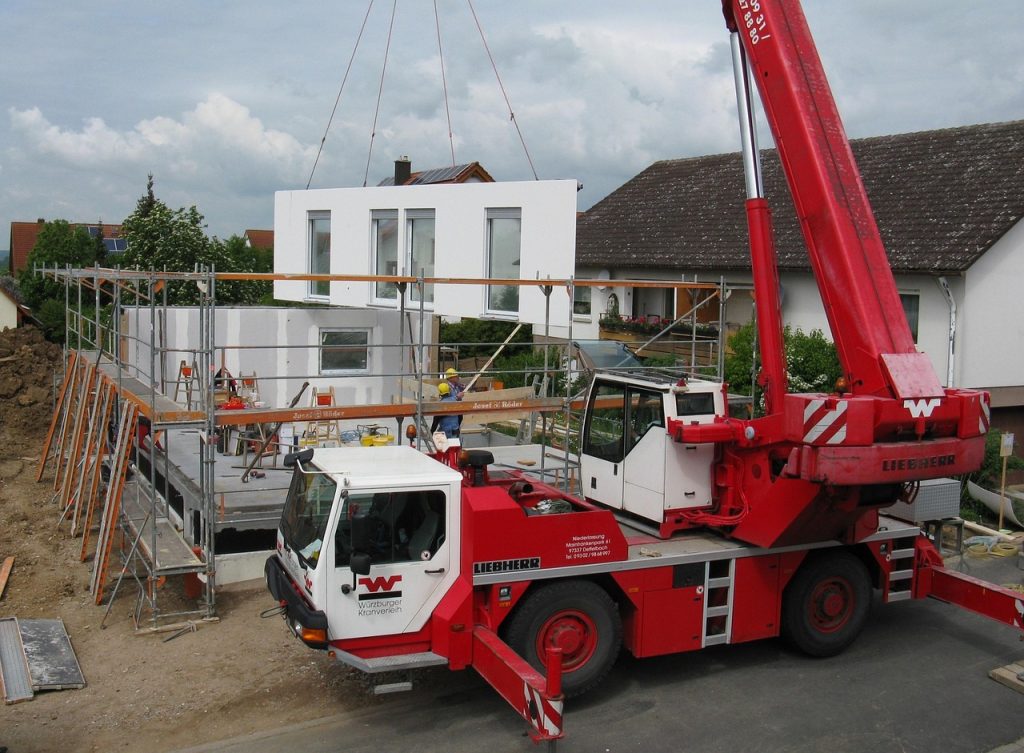
Material estimation is the process of calculating the exact quantity and cost of materials required to complete a construction project. It serves several key purposes:
- Budget Planning: Helps in determining the total project cost and ensures financial feasibility.
- Procurement Scheduling: Ensures that the right materials are available when needed to prevent project delays.
- Waste Reduction: Accurate estimation reduces over-ordering and unnecessary waste.
- Project Management: Provides a clear framework for planning labor, equipment, and logistics.
- Tendering and Contracts: Contractors use material estimates to submit realistic bids and manage profit margins.
In short, material estimation forms the financial and logistical backbone of every successful construction project.
Also read: 7 Best Custom Furniture Companies in Bali
The Core Principles of Construction Material Estimation
Before diving into formulas and calculations, it’s crucial to grasp the foundational principles that govern accurate estimation:
- Quantification: Measuring or calculating the quantity of each material required.
- Standardization: Using consistent units and industry standards to ensure clarity and accuracy.
- Specification Matching: Understanding the quality, grade, and dimensions required for each material.
- Waste Allowance: Including a buffer for material wastage due to cutting, errors, or handling.
- Local Adjustments: Considering site conditions, transportation costs, and availability of materials.
These principles help ensure that the estimate reflects both the design intent and the real-world construction environment.

Steps to Estimate Construction Materials
Estimating materials involves a structured, step-by-step process. Below is a breakdown of the most essential stages.
Step 1: Study the Construction Drawings and Specifications
Before making any calculations, carefully analyze the architectural, structural, and MEP (mechanical, electrical, plumbing) drawings.
Pay attention to:
- Building dimensions (length, width, height)
- Material specifications (types of cement, steel grades, finishes, etc.)
- Structural elements (foundation, beams, columns, slabs)
- Wall and floor thickness
- Roofing and ceiling details
Drawings are your blueprint for every quantity you’ll calculate. Never skip this stage.
Step 2: Break the Project into Work Sections
Divide the project into smaller, manageable sections or work packages. A common approach is to follow the Uniformat or CSI MasterFormat classification systems, such as:
- Substructure: Foundation, footings, base slabs
- Superstructure: Columns, beams, walls, floors
- Roofing: Trusses, tiles, waterproofing layers
- Finishes: Plastering, painting, flooring
- External Works: Landscaping, drainage, paving
Breaking down the project this way makes it easier to focus on one component at a time.
Step 3: Take Off Quantities (Quantity Takeoff)
Quantity Takeoff (QTO) is the process of measuring all materials directly from drawings.
Here’s how it’s typically done:
- Dimensions are extracted from plans, elevations, and sections.
- Formulas are applied to calculate volume, area, or length.
- Quantities are tabulated systematically in a Bill of Quantities (BoQ).
For example:
- Volume of concrete = Length × Width × Height
- Area of plaster = Length × Height (for each wall)
- Number of bricks = Wall volume ÷ Volume of one brick
This step is often assisted by digital tools such as AutoCAD, Bluebeam, or PlanSwift, but can also be done manually for small projects.
Step 4: Include Waste and Loss Factors
Even the most precise calculations must account for material wastage. Common waste allowances include:
- Concrete: 2–5%
- Bricks: 3–5%
- Tiles: 5–10%
- Paint: 3–5%
- Steel Reinforcement: 2–4%
- Plaster and mortar: 10–12%
This ensures that the project doesn’t run short of materials due to cutting errors, transportation loss, or poor handling.
Step 5: Apply Material Conversion Factors
Sometimes, materials are purchased in units different from those used in drawings.
For example:
- Cement may be ordered in bags, but drawings use cubic meters of concrete.
- Sand is often measured in cubic meters, while suppliers quote in tons.
In such cases, conversion factors are used:
- 1 cubic meter of cement concrete = ~7.5 bags of cement (depending on mix ratio)
- 1 cubic meter of sand = ~1600 kg
- 1 cubic meter of steel = ~7850 kg
Knowing these relationships ensures consistency between design quantities and procurement quantities.
Step 6: Prepare the Bill of Quantities (BoQ)
The BoQ is a structured document listing all quantities, descriptions, and units for every material.
A standard BoQ table includes:
| Item No | Description | Unit | Quantity | Unit Rate | Total Cost |
For example:
| 1 | Concrete for foundation (1:2:4 mix) | m³ | 25 | $100 | $2,500 |
| 2 | Reinforcement steel | kg | 2,500 | $1.2 | $3,000 |
| 3 | Brick masonry | m³ | 18 | $80 | $1,440 |
This document forms the basis for tendering, budgeting, and material ordering.
Common Materials and How to Estimate Them
Let’s explore some of the most commonly used materials in construction and how to estimate their quantities.
A. Cement Concrete
Concrete is a mixture of cement, sand, aggregate, and water.
To estimate concrete, calculate volume first, then apply the mix ratio.
Example:
If a beam requires 1.2 m³ of concrete with a mix ratio of 1:2:4 (cement:sand:aggregate):
Total parts = 1 + 2 + 4 = 7
Cement = (1/7) × 1.2 = 0.171 m³
Sand = (2/7) × 1.2 = 0.343 m³
Aggregate = (4/7) × 1.2 = 0.686 m³
Since 1 m³ of cement = 1440 kg,
Cement = 0.171 × 1440 = 246 kg = 4.9 bags (use 5 bags)
So, for 1.2 m³ of concrete, you need:
- 5 bags of cement
- 0.34 m³ of sand
- 0.69 m³ of aggregate
B. Brickwork
Brickwork estimation is based on the volume of wall and size of brick.
Example:
Wall volume = 10 m (length) × 3 m (height) × 0.2 m (thickness) = 6 m³
If one brick (with mortar) = 0.002 m³,
Number of bricks = 6 ÷ 0.002 = 3000 bricks
Add 5% waste = 3150 bricks.
Also estimate mortar:
Mortar volume ≈ 25% of brickwork volume = 0.25 × 6 = 1.5 m³
For 1:6 cement mortar:
- Cement = (1/7) × 1.5 = 0.214 m³ = ~308 kg = 6 bags
- Sand = (6/7) × 1.5 = 1.29 m³
C. Plastering
Plaster area = perimeter × height
For a 10 m × 3 m wall: 10 × 3 = 30 m²
For both sides: 30 × 2 = 60 m²
Thickness = 12 mm = 0.012 m
Volume of plaster = 60 × 0.012 = 0.72 m³
For 1:4 plaster mix:
- Cement = (1/5) × 0.72 = 0.144 m³ = 208 kg = 4 bags
- Sand = (4/5) × 0.72 = 0.576 m³
D. Reinforcement Steel
Steel is estimated based on structural drawings showing bar lengths, diameters, and spacing.
You can use the standard formula:
Weight = (D²/162) × Length
Where D = bar diameter (mm), Length in meters.
For example, 16 mm diameter bar, 10 m long:
Weight = (16²/162) × 10 = 15.8 kg
Add 2–4% for cutting and bending losses.
E. Paint
Paint estimation depends on surface area and coverage rate per liter.
Example:
If 1 liter covers 10 m² (two coats) and wall area is 120 m²:
Required paint = 120 ÷ 10 = 12 liters
Add 5% waste = 12.6 liters.
Tools and Software for Material Estimation
While manual estimation builds a solid foundation, modern tools make the process faster and more accurate. Commonly used software includes:
- AutoCAD – For extracting accurate dimensions.
- Bluebeam Revu – For digital quantity takeoffs from PDFs.
- PlanSwift – For quick area, volume, and count estimation.
- CostX – For BIM-integrated quantity estimation and cost planning.
- MS Excel – For manual calculations and BoQ preparation.
These tools reduce human error, improve documentation, and save significant time during the estimation phase.
Common Mistakes in Material Estimation
Even professionals can make costly errors. Here are the most frequent ones and how to avoid them:
- Ignoring Site Conditions: Sloped sites, soil types, and climate can affect material quantities.
- Misreading Drawings: Overlooking scale or section details can lead to major errors.
- No Allowance for Waste: Not adding waste factors can result in shortages mid-project.
- Using Outdated Unit Rates: Market prices change frequently; always verify latest rates.
- Not Coordinating with Other Trades: Plumbing, electrical, or HVAC elements may alter structural or finishing quantities.
- Inconsistent Units: Mixing cubic meters, feet, or kilograms without proper conversion leads to calculation errors.
Accuracy in estimation depends on attention to detail and rigorous verification.
Best Practices for Accurate Estimation
To refine your material estimation skills, follow these best practices:
- Cross-check calculations: Always double-check critical quantities and dimensions.
- Maintain a cost database: Keep updated material rates for local suppliers.
- Use standard references: Refer to national construction standards or handbooks (like SNI or ASTM).
- Regular site visits: Verify actual progress and consumption to fine-tune future estimates.
- Collaborate with engineers and contractors: Communication reduces discrepancies between design and execution.
- Document assumptions: Clearly record all estimation assumptions for transparency and revisions.
Also read: 7 Best Bali Pool Designs for Tropical Living
The Role of Material Estimation in Project Success
Accurate material estimation doesn’t just affect budgeting it influences every phase of the project lifecycle.
Here’s how:
- In Design Stage: Helps architects understand cost implications of design choices.
- In Procurement Stage: Guides the purchase schedule and supplier negotiations.
- During Construction: Prevents material shortages and reduces delays.
- In Project Closeout: Ensures efficient resource utilization and cost control.
In essence, estimation is the strategic link between design imagination and construction reality.
Conclusion
Learning how to estimate construction materials is more than just a mathematical exercise it’s about developing an eye for detail, a sense of proportion, and an understanding of how design translates into physical form.
For beginners, it may feel like a lot to absorb from interpreting drawings to applying formulas and managing units but with consistent practice, the process becomes intuitive. Start small: estimate a single wall, a slab, or a foundation. Gradually, as your experience grows, you’ll learn to balance precision with practicality.
In construction, even a minor miscalculation can ripple into major cost overruns or delays. But with a well-structured approach, proper documentation, and smart use of technology, you can ensure your estimates are accurate, efficient, and aligned with real-world project conditions.
Ultimately, the goal of material estimation is not just to count materials but to build confidence, control, and clarity into every project you design or manage. It’s one of the most valuable skills any aspiring construction professional can master, paving the way for smarter, more sustainable, and successful building practices.


Indah Suzanne
Indah Suzanne is a key player in Indonesia's design and architecture scene, leading Karyanusa Asia from Bali. As the driving force behind Karyanusa Asia in Bali, she combines innovative design concepts with exceptional construction expertise, delivering world-class villas, commercial spaces, and bespoke architectural projects that reflect both modern elegance and the island’s rich cultural heritage.