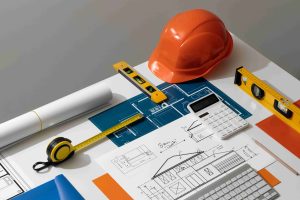


Construction estimating is one of the most critical functions in the building and infrastructure industry. It determines how much a project will cost, how resources will be allocated, and whether a construction plan is financially feasible before work begins. A well-prepared estimate provides clarity for owners, contractors, engineers, and investors, reducing uncertainty and minimizing the risk of cost overruns. Without a structured estimating process, even technically sound projects can face serious financial and scheduling problems.
This complete step-by-step guide explains the construction estimating process in detail, from early conceptual planning to final bid preparation. It is designed for contractors, civil engineers, project managers, students, and property developers who want a clear and practical understanding of how accurate construction estimates are developed.
What Is Construction Estimating?

Construction estimating is the systematic process of predicting the total cost required to complete a construction project. It involves analyzing drawings, specifications, site conditions, labor productivity, material prices, equipment needs, and project timelines. The goal is to calculate a realistic cost that reflects both direct construction expenses and indirect project costs.
An estimate is not a guess. It is a professional assessment based on technical knowledge, historical data, market conditions, and risk analysis. Accurate estimating allows stakeholders to make informed decisions about design options, contractor selection, and project execution strategies.
Also read: Types of Foundation in Construction: Materials, Design, and Applications
Why the Construction Estimating Process Matters
The estimating process directly affects the success of a construction project. A detailed and accurate estimate helps ensure that:
- Projects remain within budget
- Contractors submit competitive and realistic bids
- Owners understand financial commitments
- Resources are planned efficiently
- Risks are identified early
Underestimating costs can lead to financial losses, disputes, and project delays. Overestimating costs may cause a contractor to lose a bid or a project to be canceled due to perceived lack of feasibility. Therefore, following a structured estimating process is essential.

Step 1: Understanding Project Scope and Objectives
The first step in construction estimating is to clearly understand the project scope. This includes identifying what will be built, how it will be built, and what standards must be met.
At this stage, the estimator reviews available information such as conceptual drawings, design briefs, technical specifications, and client requirements. It is important to clarify the project type, whether it is residential, commercial, industrial, or infrastructure-based, as each category has different cost drivers.
Understanding the scope also means recognizing exclusions and limitations. Knowing what is not included in the project is just as important as knowing what is included. Clear scope definition prevents misunderstandings and costly changes later.
Step 2: Reviewing Construction Drawings and Specifications
Once the project scope is defined, the next step is a detailed review of construction drawings and specifications. These documents form the technical foundation of the estimate.
Architectural drawings define layouts, finishes, and spatial arrangements. Structural drawings provide information about foundations, columns, beams, and slabs. Mechanical, electrical, and plumbing drawings outline system requirements. Specifications describe materials, workmanship standards, and testing requirements.
Careful review helps identify potential cost implications such as complex structural elements, high-end finishes, or specialized construction methods. Any ambiguities or missing information should be noted, as they may affect cost accuracy.
Step 3: Conducting a Site Analysis
Site conditions play a major role in construction costs. A thorough site analysis helps estimators understand factors that may impact excavation, logistics, and construction methods.
Key aspects of site analysis include soil conditions, topography, access roads, nearby buildings, utilities, and environmental restrictions. For example, poor soil may require deeper foundations or ground improvement, increasing costs. Limited site access may affect material delivery and equipment usage.
In some cases, estimators conduct site visits or review geotechnical reports to better understand site-specific challenges. Ignoring site conditions can result in significant cost overruns during construction.
Step 4: Quantity Takeoff and Measurement
Quantity takeoff is one of the most important steps in the estimating process. It involves measuring and calculating the quantities of materials required to complete the project.
This step includes measuring concrete volumes, reinforcement steel weights, brickwork areas, flooring quantities, and finishes. Accuracy is critical, as even small errors in quantities can lead to large cost discrepancies.
Estimators typically organize quantities according to construction activities or trade categories. This structured approach helps ensure that no item is overlooked and makes it easier to apply unit costs in later steps.
Step 5: Determining Material Costs
After quantities are calculated, the next step is to determine material costs. This involves assigning current market prices to each material item.
Material costs can vary significantly based on location, availability, quality, and supplier conditions. Estimators must consider transportation costs, storage requirements, and potential price fluctuations, especially for long-duration projects.
Bulk purchasing discounts, supplier agreements, and local sourcing opportunities may also influence material pricing. Using up-to-date cost data is essential for maintaining estimate accuracy.
Step 6: Estimating Labor Costs
Labor costs represent a major portion of construction expenses. Estimating labor involves determining the number of workers required, their skill levels, and the time needed to complete each activity.
Labor productivity rates are used to calculate how long specific tasks will take. These rates depend on worker experience, site conditions, equipment availability, and project complexity.
Wages, overtime rates, benefits, and insurance must all be included in labor cost calculations. Failing to account for realistic productivity levels is one of the most common causes of underestimating construction costs.
Step 7: Calculating Equipment and Machinery Costs
Construction equipment is essential for many tasks, including excavation, lifting, concrete placement, and material transport. Estimators must account for equipment rental or ownership costs.
Equipment costs may include rental fees, fuel, maintenance, operator wages, and transportation to and from the site. The duration of equipment use should be carefully estimated to avoid under- or over-allocation.
Proper equipment planning helps optimize construction schedules and reduce unnecessary expenses.
Step 8: Including Subcontractor Costs
Many construction projects rely on subcontractors for specialized work such as electrical installations, plumbing, HVAC systems, or façade construction. Estimators must include subcontractor costs based on quotes or historical data.
Clear scope definition for subcontracted work is essential to prevent overlaps or gaps in responsibilities. Subcontractor estimates should align with the overall project schedule and quality standards.
Step 9: Adding Overhead Costs
Overhead costs include expenses that are not directly tied to construction activities but are necessary for project execution. These may include site offices, utilities, supervision, administrative staff, permits, insurance, and safety measures.
Overhead costs can be categorized as project overhead or company overhead. Both types must be allocated appropriately to ensure the estimate reflects the true cost of the project.
Step 10: Applying Contingency and Risk Allowances
No construction project is completely predictable. Unexpected conditions, design changes, and market fluctuations can all affect costs. Contingency allowances are included to manage these uncertainties.
The contingency amount depends on project complexity, design completeness, and risk exposure. Including a reasonable contingency helps protect both contractors and owners from financial shocks during construction.
Step 11: Preparing the Final Cost Summary
After all cost components are calculated, the estimator prepares a final cost summary. This document presents the total estimated project cost in a clear and organized format.
The summary typically includes a breakdown of costs by trade or activity, along with totals for materials, labor, equipment, overhead, and contingency. A well-structured cost summary allows stakeholders to review and understand how the estimate was developed.
Step 12: Review, Validation, and Adjustment
Before finalizing the estimate, a thorough review is essential. This includes checking calculations, verifying quantities, and comparing results with similar past projects.
Peer reviews or management reviews help identify errors or unrealistic assumptions. Adjustments may be made to reflect updated information or strategic considerations, especially for competitive bidding situations.
Step 13: Bid Preparation and Submission
For contractors, the estimating process often leads to bid preparation. The final estimate is used to determine the bid price, which may include profit margins and strategic pricing adjustments.
A well-prepared bid reflects both technical understanding and financial realism. Clear documentation supports transparency and reduces the risk of disputes if the bid is successful.
Common Challenges in Construction Estimating
Construction estimating is complex and subject to various challenges. These include incomplete design information, volatile material prices, labor shortages, and unexpected site conditions.
Time constraints during bidding periods can also pressure estimators, increasing the risk of errors. Effective communication, updated cost databases, and systematic processes help overcome these challenges.
Role of Technology in the Estimating Process
Modern construction estimating increasingly relies on digital tools. Software applications assist with quantity takeoff, cost databases, and scenario analysis. Building information modeling allows estimators to extract quantities directly from 3D models, improving accuracy and efficiency.
Technology also supports collaboration between estimators, designers, and project managers, ensuring that cost data remains aligned with design changes.
Also read: 7 Best Italian Restaurants in Bali: A Complete Guide for this year
Best Practices for Accurate Construction Estimating
To improve accuracy and reliability, estimators should follow best practices such as:
- Maintaining updated cost data
- Conducting thorough site analysis
- Using standardized measurement methods
- Reviewing estimates regularly
- Documenting assumptions clearly
Continuous learning and experience play a crucial role in developing strong estimating skills.
Conclusion
The construction estimating process is a structured and disciplined approach to forecasting project costs. By following a clear step-by-step methodology, estimators can produce reliable and realistic cost projections that support informed decision-making.
From understanding project scope and analyzing drawings to calculating quantities, costs, and risks, each step contributes to the overall accuracy of the estimate. As construction projects become more complex and competitive, the importance of professional estimating continues to grow.
Mastering the construction estimating process not only improves financial control but also enhances project planning, reduces disputes, and supports successful project delivery. For anyone involved in construction, a solid understanding of this process is an essential foundation for long-term success.


Indah Suzanne
Indah Suzanne is a key player in Indonesia's design and architecture scene, leading Karyanusa Asia from Bali. As the driving force behind Karyanusa Asia in Bali, she combines innovative design concepts with exceptional construction expertise, delivering world-class villas, commercial spaces, and bespoke architectural projects that reflect both modern elegance and the island’s rich cultural heritage.